Plate Heat Exchangers About
Product Specification
|
Material
|
Mild Steel
|
|
Usage/Application
|
Industrial
|
|
Flow Rate
|
60 M3/h
|
|
Pressure
|
16 Bar
|
|
Usage
|
Heating, Drying Or Cooling
|
|
Voltage
|
240 V
|
|
Height
|
1069 mm
|
|
Width
|
470 mm
|
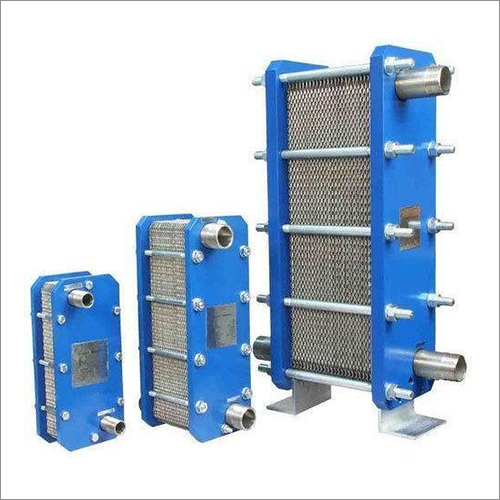
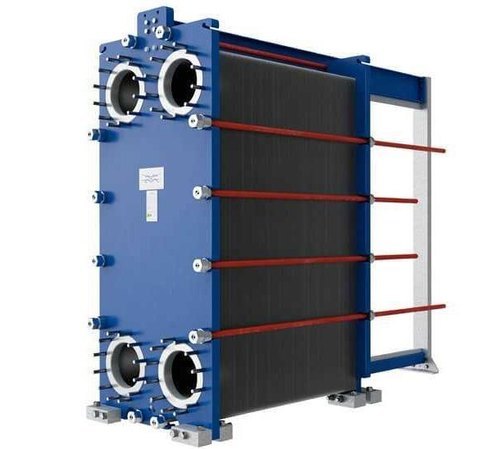
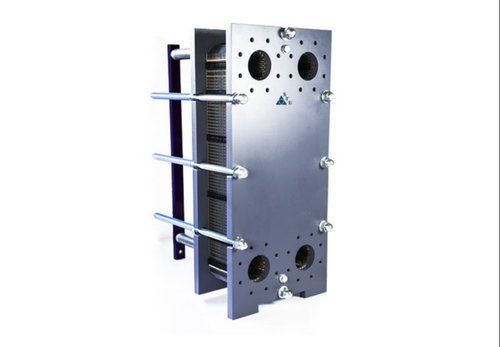
Advanced Oil Cooling TechnologyOur Plate Heat Exchanger utilizes a highly efficient design, maximizing the surface area for heat transfer in oil cooling applications. Its 470 mm width and 1069 mm height allow for optimal flow distribution and improved thermal performance, ideal for demanding industrial environments.
Engineered for Reliability and EfficiencyManufactured with precision and using high-grade materials, this exchanger operates at 240 volts and delivers consistent, reliable cooling. As an established manufacturer, exporter, and supplier in India, we uphold strict quality controls throughout production to ensure durability and minimal downtime.
FAQ's of Plate Heat Exchangers:
Q: How does a plate heat exchanger work in oil cooling applications?
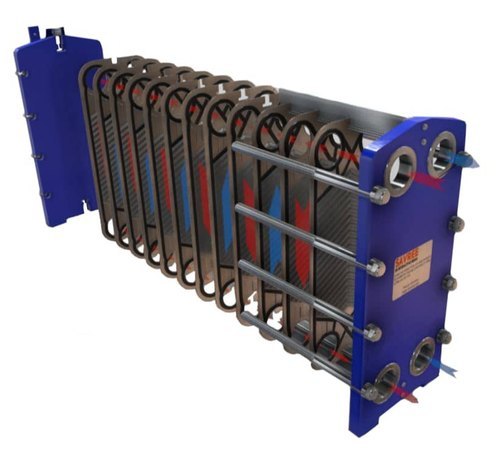
A: A plate heat exchanger works by transferring heat between oil and a secondary fluid through a series of thin, corrugated plates. This efficient design allows effective cooling as the oil passes between the plates, dissipating heat quickly and maintaining the desired temperature.
Q: What are the key benefits of using this plate heat exchanger for oil cooling?
A: This plate heat exchanger offers rapid heat transfer, compact dimensions (470 mm width, 1069 mm height), energy efficiency, and easy maintenance. It enhances process reliability and prolongs equipment life by efficiently maintaining optimal oil temperatures.
Q: When should you opt for a plate heat exchanger in industrial oil cooling?
A: You should choose a plate heat exchanger when your application demands efficient, space-saving oil cooling with consistent performance. It is especially beneficial for processes requiring stable temperature control and minimal energy consumption.
Q: Where can this plate heat exchanger be installed?
A: This unit is suitable for installation in various industrial environments, including manufacturing plants, hydraulic systems, or any setup where oil cooling is essential. Its size and voltage compatibility make it adaptable to a wide range of applications.
Q: What is the manufacturing process for this plate heat exchanger?
A: The manufacturing process involves precision cutting and forming of high-quality metal plates, which are then assembled and sealed together. Rigorous quality checks are conducted to ensure optimal performance and leak-free operation.
Q: How is this plate heat exchanger used and maintained?
A: To use, simply integrate the unit into your oil cooling system at key points where heat removal is necessary. Regular maintenance involves checking for fouling, ensuring plate integrity, and periodically cleaning to preserve maximum heat transfer efficiency.






 Send Inquiry

